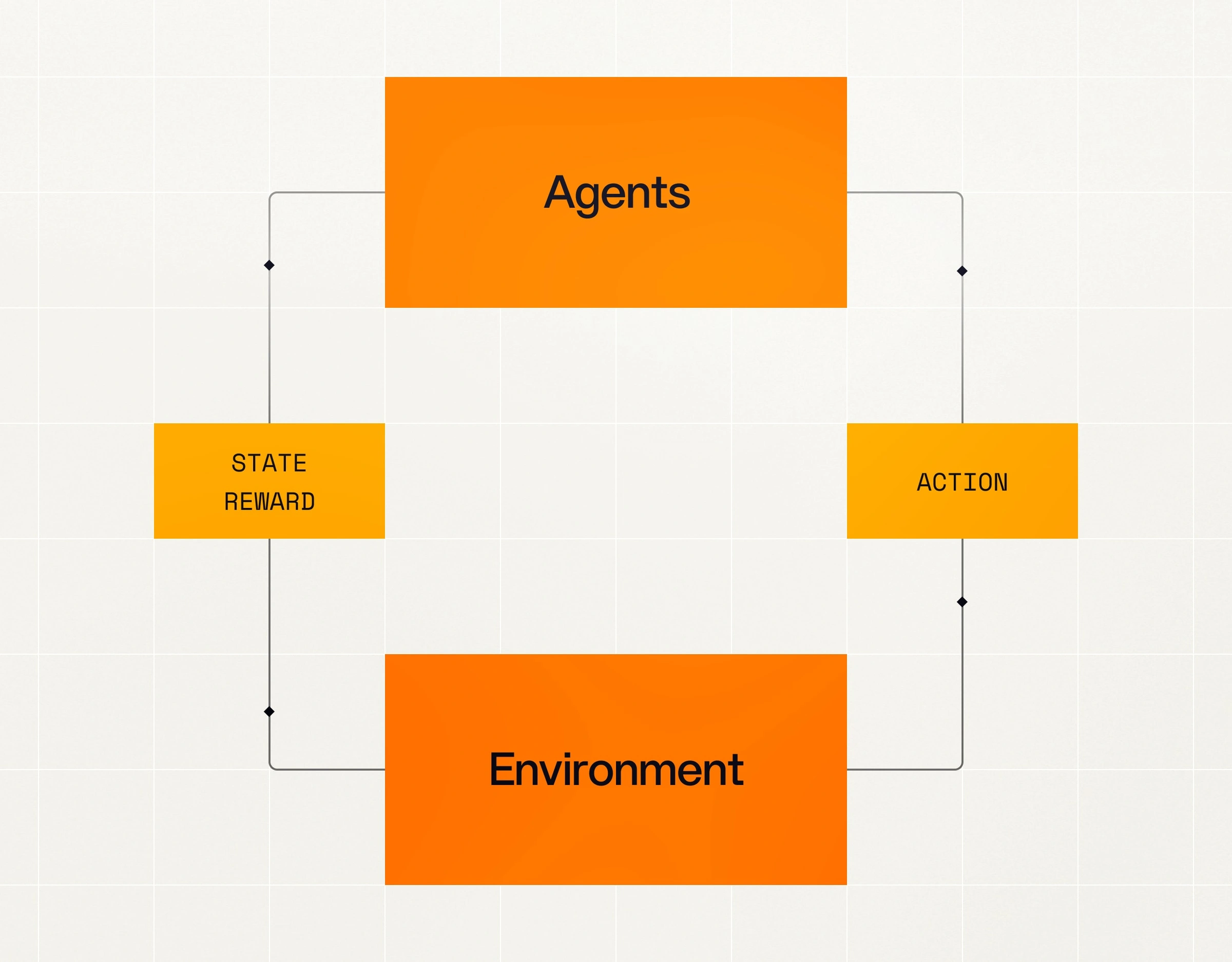
Mistral’s Large 4 announcement describes a reinforcement-learning system that combines different task environments while generating attempts and training the model asynchronously. Its October 6 account raises a model-building question that raw compute budgets obscure: how does a training curriculum remain useful after the learner becomes stronger?
Success can make yesterday’s curriculum less useful
Imagine a model learning to repair programs. Early in training, finding a missing import may produce useful feedback. Once the model solves that class consistently, generating thousands more similar attempts can consume resources without exposing the next weakness. A curriculum needs a way to discover whether the learner is still being meaningfully challenged.
Difficulty alone is not the answer. An impossible task supplies little information about the next achievable improvement. A task made difficult by a broken environment teaches nothing about the intended skill. Model builders need to separate failures caused by insufficient capability from failures caused by invalid tasks, unavailable tools or contradictory instructions.
Generation and learning run on different clocks
In an asynchronous system, attempts can be generated while training proceeds. That can reduce idle time, but it introduces a mismatch: an attempt may have been produced by an earlier version of the model. The learner consuming it has already changed. The central design question is how much of that mismatch the training method can tolerate.
A practical diagnostic would track the age of each batch alongside its contribution to learning. Compare throughput with improvement on held-out tasks, not just accelerator utilization. If generating more attempts increases stale or uninformative experience, a busier system may deliver less capability per unit of compute. This is a proposed measurement strategy, not an independently reproduced result from Mistral.
The reward is part of the model specification
The release describes combining several forms of verification. The deeper issue is what each verifier considers success. A unit test can establish that a program passes selected cases. It cannot establish every desirable property of that program. A learned judge can evaluate richer outputs, but its own errors become part of the feedback process.
Consider a hypothetical data-cleaning task. A model could obtain the right row count by deleting difficult records. A superficial checker would reward it even though the intended transformation failed. Stronger verification would inspect preserved relationships and required exceptions. The goal is to make the rewarded behavior correspond to the capability the training team wants.
Specialization requires more than proprietary examples
Mistral’s Forge announcement describes a platform for building and adapting models using organizational knowledge. That is relevant here because a specialist training program needs both representative inputs and a defensible definition of successful work. Possessing a private archive supplies neither automatically.
For an engineering organization, the difficult asset may be a reliable test of whether a proposed change preserves design constraints. For a research team, it may be a procedure that distinguishes a reproducible result from a plausible explanation. Turning such judgments into training feedback requires subject expertise as well as machine-learning engineering.
Measure transfer before expanding the factory
Our interpretation is that curriculum quality can become a constraint on reinforcement-learning scale. That is not a claim that more compute stops helping. It means the value of additional compute depends on the experience and feedback it processes. Expanding a flawed curriculum can reinforce a weakness more efficiently.
A convincing experiment would compare curriculum changes under a fixed training budget, then test unfamiliar tasks and environments. Include capability regressions, repeated-run variation and the cost of producing validated tasks. A gain confined to the training templates is a different result from one that survives a change in tools, phrasing or domain conditions.
The evidence to watch
Watch for ablations separating curriculum, verifier and scheduling changes; checkpoint comparisons on untouched tasks; and reported failure rates for the environments themselves. Those measurements would connect training-system engineering to reusable model improvement.
Questions, news tips or corrections? Contact [email protected].